A Comprehensive Analysis of Groundwater vs. Surface Water Treatment: Differences, Processes, and Cost Optimization Guide
Water is the source of life, and the safety and compliance of drinking water cannot be achieved without scientific water treatment processes. Among the commonly used drinking water sources for humans, groundwater (such as well water and underground aquifers) and surface water (such as rivers, lakes, and reservoir water) occupy a dominant position. Due to significant differences in their water quality characteristics and pollutant compositions, the corresponding treatment approaches, core processes, and cost investments also vary greatly. Starting from the differences in water quality, this article will comprehensively compare the treatment logic, key technologies, and cost considerations of groundwater and surface water, providing practical references for relevant practitioners and readers concerned about drinking water safety.
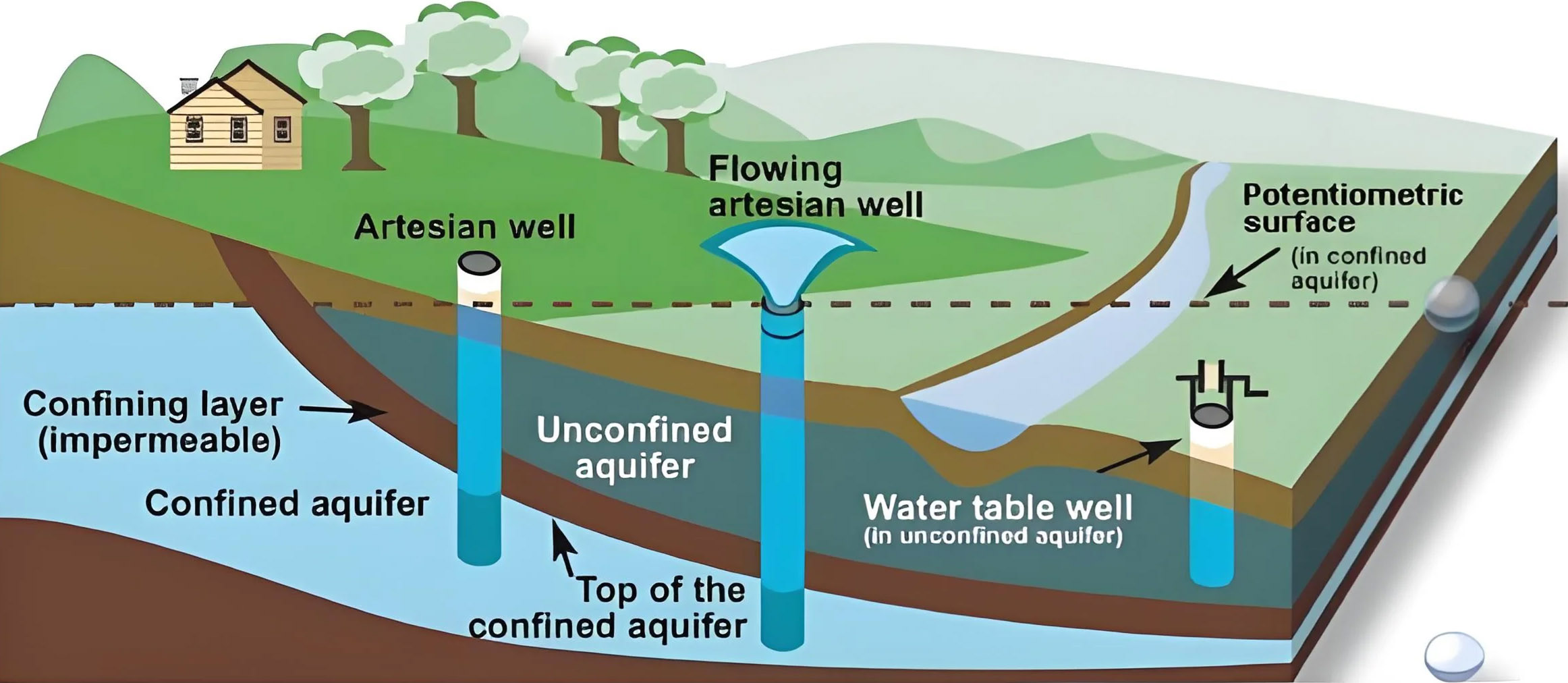
I. Significant Differences in Water Quality Fundamentals: Core Distinctions Between Groundwater and Surface Water
To achieve effective water treatment, it is first necessary to understand the "basic condition of the water source". Due to the different environments in which they are located, groundwater and surface water exhibit distinct differences in the types and concentrations of pollutants, which serves as the core basis for the selection of subsequent treatment processes.
(I) Surface Water: An "Complex System" Exposed to the Outside
Surface water is in direct contact with the natural environment and is an important part of the ecosystem. Its water quality is greatly affected by external factors:
- High organic matter content: The concentration of total organic carbon (TOC) in the water body is much higher than that in groundwater. Most of these organic substances come from natural processes such as the remains of plants and animals and algal metabolism;
- Prominent microbial pollution: Pathogens such as bacteria, viruses, and parasites (e.g., Cryptosporidium) are abundant, which are the main factors causing drinking water safety risks;
- Susceptibility to anthropogenic pollution: Discharge of industrial wastewater, loss of agricultural chemical fertilizers and pesticides, and inflow of domestic sewage can introduce artificial pollutants such as industrial solvents and pesticide residues, while increasing the turbidity of the water body;
- Poor sensory properties: Odors and abnormal colors often occur due to algal blooms and organic matter decomposition, affecting the drinking experience.
(II) Groundwater: A "Mineral-Rich Body" Hidden Underground
Groundwater is stored in underground aquifers and is less disturbed by the surface environment, resulting in relatively stable water quality. However, it has unique pollution problems:
- Low organic matter content: The total organic carbon (TOC) and microbial count are much lower than those of surface water, resulting in a higher natural "cleanliness";
- Excessive inorganic pollutants: Due to long-term contact with underground rocks and soil, it is prone to dissolving minerals and heavy metals such as arsenic, iron, manganese, sulfate, and nitrate. In some areas, the problem of excessive arsenic and lead in groundwater is prominent;
- Risk of special organic pollution: In a few cases, leakage from underground storage tanks and infiltration of agricultural/industrial pollutants can lead to excessive synthetic organic pollutants such as solvents and herbicides;
- Hidden danger of disinfection by-products: Although the total amount of organic matter is small, some types of organic substances are complex, and more harmful disinfection by-products (DBPs) may be generated during disinfection compared to surface water.
II. A Comparison of Treatment Processes: Targeted Solutions to the Pain Points of Different Water Sources
The core of water treatment is to "apply the right remedy to the case". Based on the differences in water quality between groundwater and surface water, the industry has developed two sets of treatment systems with different focuses, while there are also some common core technologies.
(I) Surface Water Treatment: Focusing on "Comprehensive Purification + Disinfection Risk Control"
Surface water contains a wide variety of pollutants with complex compositions. Its treatment needs to address three major objectives: "impurity removal, sterilization, and by-product control". The conventional treatment process is mature and comprehensive:
- Pretreatment: Remove large impurities (such as branches and sediment) from the water through grilles and grit chambers to reduce the burden on subsequent processes;
- Core purification: Adopt the classic combination of "coagulation - flocculation - sedimentation" - add chemicals to the water to aggregate fine impurities and colloidal particles into large flocs (alum flowers), which are then separated through sedimentation;
- Filtration upgrading: After sedimentation, the water enters the filtration stage. Traditionally, dual-media gravity filtration is used. Nowadays, to deeply remove organic matter, most water treatment plants (WTPs) have upgraded to granular activated carbon (GAC) filtration. GAC has strong adsorption capacity, which can capture organic matter that is not removed in the coagulation and flocculation stages, and can also effectively treat refractory pollutants such as per- and polyfluorinated substances (PFAS);
- Disinfection and risk control: After filtration, disinfection (commonly using chlorine) is required to kill pathogens. However, chlorine easily reacts with organic matter to generate DBPs. If the water treatment plant has limited space and cannot provide sufficient reaction time through GAC filtration, a "lead-lag dual-tank" configuration can be adopted. The lead tank mainly adsorbs pollutants, and the lag tank acts as a buffer to prevent pollutant breakthrough. This not only improves the purification effect but also reduces the generation of DBPs;
- Process characteristics: The process is long with multiple links, requiring the removal of various pollutants. The technology is mature, but the initial equipment investment is relatively high.
(II) Groundwater Treatment: Emphasizing "Targeted Removal + Secondary Disinfection"
Groundwater contains less organic matter and microorganisms, so the core of its treatment is to solve the problems of excessive inorganic minerals and special pollution, and the process is more targeted:
- Simple treatment scenarios: If the groundwater has low mineral content and no obvious pollution, only simple filtration (to remove a small amount of sediment) or direct disinfection is required, and in some cases, it can even meet the standards without treatment;
- Targeted purification:
- Organic pollution: GAC filtration is used to remove synthetic organic pollutants such as solvents and herbicides, which has stable effects and low operating costs;
- Inorganic pollution: For heavy metals and minerals such as arsenic, iron, and manganese, ion exchange, reverse osmosis, or specialized chemical precipitation processes are required. These processes have high initial equipment investment and high subsequent consumable replacement costs;
- Control of disinfection by-products: Some groundwater has excessive DBPs after disinfection, so a GAC adsorption link needs to be added after primary disinfection to remove DBPs. However, this process consumes chlorine, so a secondary disinfection step needs to be added to form a special process of "disinfection - adsorption - re-disinfection". The feasibility of this process needs to be evaluated based on the scale and budget of the water treatment plant;
- Process characteristics: The process is relatively simple, but special equipment needs to be configured for specific pollutants. The process selection has high flexibility and is greatly affected by water quality fluctuations and policy requirements.
III. Cost and Policy Considerations: How to Select the Optimal Treatment Plan
When selecting a treatment process, water treatment plants need to find a balance among "treatment effect, operating cost, and policy compliance". The cost structure and decision-making logic vary significantly between different water sources.
(I) Cost Composition: Initial Investment vs. Long-Term Operation
-
Surface water treatment:
- Initial investment: The equipment installation and site construction costs for the conventional process + GAC filtration system (or dual-tank configuration) are relatively high;
- Operating cost: GAC media is affordable, easy to maintain, and has low subsequent replacement and disposal costs, resulting in outstanding long-term operating cost-effectiveness;
- Subsidy support: Applications can be made for state revolving funds and special funds from the Federal Infrastructure Act to upgrade equipment for DBP and PFAS treatment, reducing financial pressure.
-
Groundwater treatment:
- Initial investment: If only GAC filtration is needed, the initial cost is relatively low; if processes such as reverse osmosis and ion exchange are involved, the equipment purchase and installation costs are relatively high;
- Operating cost: Consumables such as ion exchange resins and reverse osmosis membranes need to be replaced frequently, and the disposal cost is high, resulting in higher long-term operating costs than the GAC process;
- Decision-making difficulty: Small community water treatment plants often use groundwater. They need to consider future environmental policies (such as possible new DBP limit requirements) to evaluate the cost difference between "current simplified treatment" and "future upgrading and transformation", avoiding repeated investments.
(II) Policy and Compliance: An Unignorable Key Factor
With the increasing stringency of environmental protection standards, both surface water and groundwater treatment need to respond to policy changes in advance:
- Surface water: Focus should be placed on the limit requirements for pollutants such as DBPs and PFAS. Priority should be given to processes that can deeply remove organic matter (such as GAC filtration) to avoid equipment transformation due to policy upgrades;
- Groundwater: In some areas, the limits for heavy metals (such as arsenic) are becoming increasingly strict. Even if the current water quality meets the standards, it is necessary to reserve space for upgrading to prevent forced shutdown and transformation due to future policy adjustments.
(III) Core Recommendations: Select Based on Needs and Consider the Long-Term
- Surface water treatment plants: Prioritize the mature scheme of "conventional process + GAC filtration". For large-scale plants, a dual-tank GAC system can be configured to balance treatment effect and operating cost, while utilizing policy subsidies to reduce initial investment;
- Groundwater treatment plants: First, conduct detailed water quality testing to identify the types of pollutants. Prioritize GAC for treating organic pollution and use specialized processes for heavy metals. Small-scale plants can make phased investments to avoid over-equipment;
- General principle: Prioritize processes that are easy to maintain, have accessible consumables, and strong policy compatibility (such as GAC filtration). Balance short-term costs and long-term compliance risks to ensure that the treatment plan is both up to standard and economical.
IV. Conclusion
The treatment of groundwater and surface water is essentially "precision treatment based on water quality differences": surface water treatment focuses on "comprehensive purification + risk control" and relies on mature combined processes to remove complex pollutants; groundwater treatment emphasizes "targeted governance + flexible adaptation" and selects specialized technologies based on the types of inorganic or organic pollution. The core consensus between the two is that the granular activated carbon (GAC) process has become the preferred choice for most water treatment plants due to its stable effect and controllable cost. The final determination of the plan needs to be comprehensively judged based on the water quality of the source, the scale of the water treatment plant, the budget level, and policy requirements.
In the future, with the upgrading of water treatment technology and the improvement of environmental protection standards, "high efficiency, low cost, and low energy consumption" will become the core trend. Both groundwater and surface water treatment will move towards the direction of "precision purification, green operation, and long-term compliance", building a solid defense line for drinking water safety.