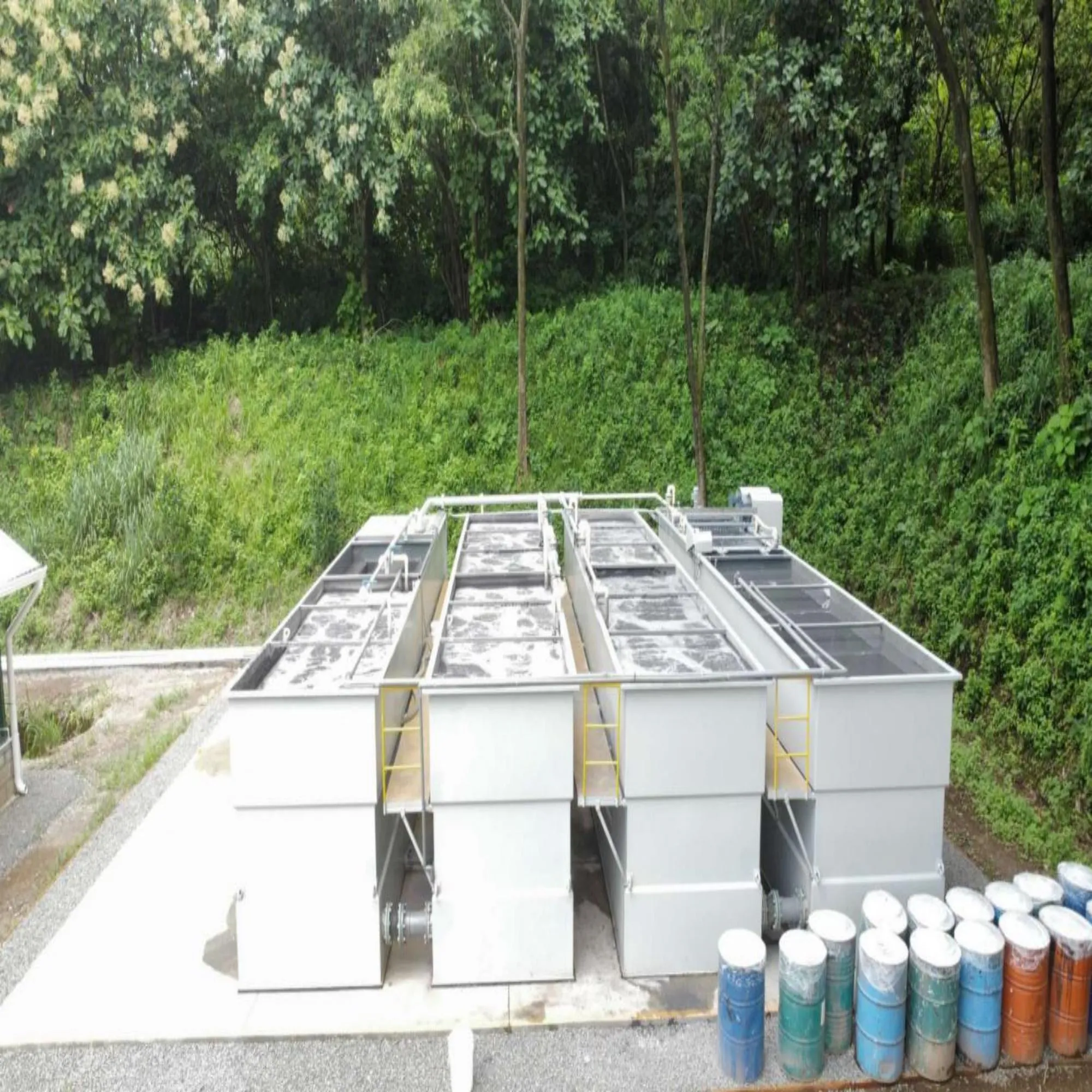
MBR Membrane Bioreactor vs Traditional Activated Sludge Method: Cost-Benefit Comparison
In today's rapidly evolving water treatment technology landscape, businesses face a critical decision: choose the traditional activated sludge process or upgrade to the more advanced MBR (Membrane Bioreactor) system? This article provides a comprehensive cost-performance analysis from four dimensions: investment cost, operating expenses, treatment efficiency, and long-term value.
Technical Principle Comparison
The traditional activated sludge process, a classic technology with a century-long history, utilizes a combination of aeration tanks and sedimentation tanks, employing microorganisms to degrade pollutants and relying on gravity settling to achieve sludge-water separation.
The MBR combines biological treatment with membrane separation technology, replacing the secondary sedimentation tank with microfiltration or ultrafiltration membrane modules to achieve highly efficient solid-liquid separation.
Cost Input Analysis
Initial Investment
- Traditional Activated Sludge Process: Lower equipment cost, larger footprint, larger civil engineering scale
- MBR System: Higher membrane module cost (approximately 30-50% of total investment), but footprint can be reduced by 30-50%, lower civil engineering costs
Operating Cost Comparison
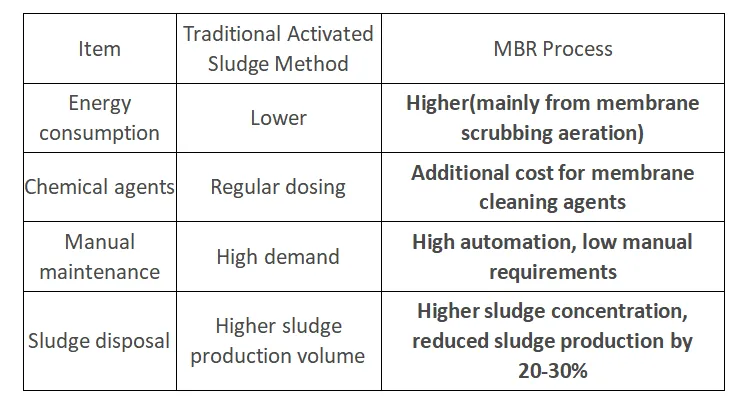
Treatment efficiency and economic returns
Effluent quality
- MBR advantages: Effluent turbidity <0.5 NTU, directly reusable, meeting or exceeding Class IV surface water standards.
- Traditional processes: Effluent quality is limited by sedimentation efficiency, usually requiring further advanced treatment before reuse.
Land area
The compact design of MBR systems is particularly suitable for situations with limited land or requiring on-site upgrades, saving 30-50% of floor space, which translates to significant land cost savings in urban areas.
Operational stability
The MBR process is highly adaptable to fluctuations in water quality and quantity; sludge bulking does not affect effluent quality, reducing the risk of operational accidents and ensuring continuous and stable compliance with standards.
Life Cycle Cost Analysis
Although the initial investment in MBR is higher, its total life cycle cost may be more advantageous when considering the following factors:
- Membrane Life and Replacement Costs: Modern MBR membranes have a lifespan of 5-8 years, significantly reducing replacement costs.
- Water Reuse Value: High-quality effluent can be directly reused, saving on fresh water extraction fees and water resource fees.
- Upgrade and Retrofit Ease: The modular design of MBR facilitates capacity expansion and adapts to future development needs.
- Environmental Compliance Costs: More stable compliant emissions reduce the risk of fines and compliance costs.
Selection Recommendations: Which process is more suitable for you?
Scenarios where traditional activated sludge processes are chosen:
- Large-scale treatment with ample land resources
- Effluent requirements meet conventional discharge standards
- Limited budget and low automation requirements
- Experienced operation team available
Scenarios where MBR processes offer better cost-effectiveness:
- Land-constrained or expensive areas
- Requirement for high-quality reclaimed water reuse
- Existing facility expansion and upgrades
- Extremely high requirements for effluent quality stability
- Pursuit of highly automated and intelligent operation
Our Professional Solutions
As a professional service provider in the water treatment field, we offer:
- Free process selection assessment, tailoring the most economical solution
- Precise cost-benefit analysis of MBR systems versus traditional processes
- Hybrid process design, balancing initial investment and long-term benefits
- Complete lifecycle maintenance services, maximizing equipment value
Conclusion
MBR and traditional activated sludge processes are not simple substitutes, but rather solutions for different needs. The cost-effectiveness advantage of MBR is evident in scenarios with high effluent quality, limited land area, and high reuse requirements; its long-term value often outweighs the initial investment difference.
Choosing the right water treatment process is a strategic decision. We recommend that companies conduct a full lifecycle cost assessment based on their actual needs, long-term plans, and sustainable development goals. Our technical team is ready to provide you with professional process comparison analysis and customized solutions.