MBR vs. MBBR vs. SBR: Which Wastewater Treatment Technology Is Best?
Wastewater treatment is a critical component of sustainable business operations, industrial compliance, and environmental protection. With a wide range of technologies available, choosing the right one for your project—whether it’s a small municipal plant, a large industrial facility, or a compact on-site system—can be a daunting task. Three of the most widely used and effective wastewater treatment technologies today are Membrane Bioreactor (MBR), Moving Bed Biofilm Reactor (MBBR), and Sequencing Batch Reactor (SBR). Each offers unique advantages, limitations, and ideal applications, tailored to different water quality requirements, space constraints, and operational budgets.
As a professional water treatment company, we help businesses worldwide select, design, and implement the optimal wastewater treatment solutions. This blog breaks down the key differences between MBR, MBBR, and SBR technologies—from how they work to their real-world applications—so you can make an informed decision about which is best for your specific needs.
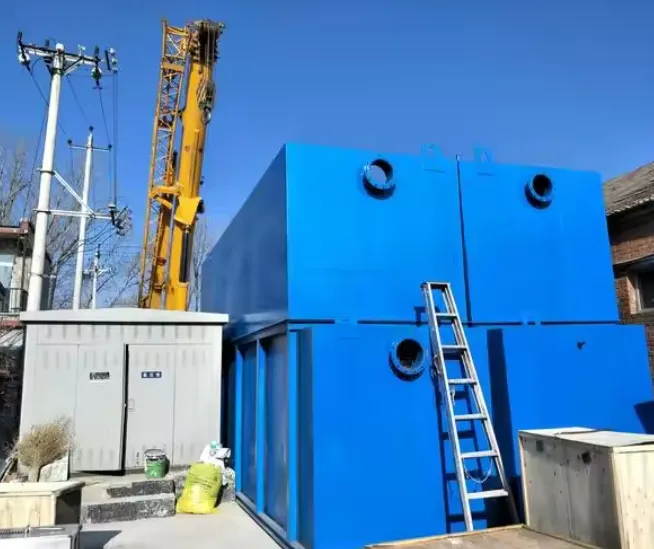
An Overview: What Are MBR, MBBR, and SBR?
Before diving into comparisons, let’s start with a brief overview of each technology, focusing on their core working principles and design characteristics—critical for understanding their strengths and weaknesses.
1. Membrane Bioreactor (MBR)
MBR combines two key processes: biological treatment (using microorganisms to break down organic pollutants) and membrane filtration (using ultrafiltration or microfiltration membranes to separate treated water from biomass). Unlike traditional activated sludge systems, MBR eliminates the need for a secondary clarifier—instead, the membrane acts as a physical barrier, removing suspended solids, bacteria, and even some viruses from the treated water. The membranes are typically submerged in the bioreactor, where aeration helps prevent fouling and supports microbial activity.
2. Moving Bed Biofilm Reactor (MBBR)
MBBR is a biofilm-based technology that uses floating, plastic carriers (often called “media”) to support the growth of microorganisms. These carriers move freely throughout the reactor, suspended by aeration or mechanical mixing, creating a large surface area for biofilm formation. As wastewater flows through the reactor, organic pollutants are broken down by the microorganisms attached to the moving carriers. MBBR is often used as a retrofit or upgrade to existing activated sludge systems, as it can increase treatment capacity without requiring significant additional space.
3. Sequencing Batch Reactor (SBR)
SBR is a batch-type process that performs all wastewater treatment steps—filling, aeration (biological treatment), settling, decanting (removing treated water), and idling—in a single tank. Unlike continuous-flow systems (MBR, MBBR), SBR operates in cycles, with each cycle lasting anywhere from a few hours to a full day. This flexibility allows it to adapt to varying wastewater flows and pollutant concentrations, making it ideal for small to medium-sized applications.
Key Comparison: MBR vs. MBBR vs. SBR
To help you compare the three technologies side by side, we’ve broken down their core features, advantages, limitations, and ideal applications in the following sections.
1. Treatment Efficiency & Water Quality
- MBR: Offers the highest treatment efficiency among the three. The membrane filtration step ensures extremely high-quality effluent—low suspended solids (SS), low biochemical oxygen demand (BOD), and low chemical oxygen demand (COD). MBR effluent is often clean enough for reuse (e.g., industrial process water, irrigation) or direct discharge to sensitive water bodies. It also effectively removes pathogens, making it suitable for applications with strict water quality standards.
- MBBR: Provides high treatment efficiency for organic pollutants (BOD, COD) and nitrogen removal. While it does not match MBR’s effluent quality (as it relies on gravity settling rather than membrane filtration), it consistently produces effluent that meets most municipal and industrial discharge standards. It is particularly effective for upgrading existing systems to improve nitrogen and phosphorus removal.
- SBR: Delivers good treatment efficiency, especially for small to medium flows. Its batch operation allows for precise control of aeration and settling times, making it effective for removing organic pollutants and nitrogen. However, its effluent quality is generally lower than MBR and comparable to MBBR, with slightly higher SS levels.
2. Space Requirements
- MBR: Requires the least space. By eliminating the secondary clarifier and concentrating biomass at higher levels, MBR systems are 30–50% more compact than traditional activated sludge systems, MBBR, or SBR. This makes MBR ideal for urban areas, industrial facilities with limited space, or on-site treatment where footprint is a critical constraint.
- MBBR: Has moderate space requirements. It is more compact than traditional activated sludge systems but requires more space than MBR. Its modular design allows for easy expansion, making it suitable for facilities that may need to increase treatment capacity over time without major renovations.
- SBR: Requires the most space. Since all treatment steps occur in a single tank (or multiple tanks operating in sequence), SBR systems need larger tank volumes to accommodate batch processing. This makes them less ideal for space-constrained applications but suitable for rural or suburban areas where land is more available.
3. Operational Cost & Maintenance
- MBR: Higher operational and maintenance costs. Membranes require regular cleaning (chemical or physical) to prevent fouling, and they need to be replaced every 5–10 years. Energy costs are also higher due to the aeration required for membrane cleaning and biomass maintenance. However, these costs are often offset by its compact size, high effluent quality, and reduced sludge production.
- MBBR: Lower operational and maintenance costs. The floating carriers are durable and require minimal replacement (every 10–15 years), and there is no need for membrane cleaning or replacement. Energy costs are moderate, as aeration is only needed to keep the carriers suspended and support microbial activity. MBBR is also easy to operate, making it suitable for facilities with limited technical staff.
- SBR: Moderate operational costs. It has no membranes or specialized carriers, so maintenance is relatively simple—primarily involving pump and valve maintenance. Energy costs are lower than MBR but higher than MBBR, as aeration is required during the treatment cycle. However, batch operation can require more manual oversight (or automated controls) to manage cycle times.
4. Ideal Applications
- MBR: Best for applications requiring high-quality effluent (e.g., water reuse, discharge to sensitive ecosystems), space-constrained facilities (urban areas, industrial plants), and projects where sludge reduction is a priority. Common uses include municipal wastewater treatment, food and beverage processing, and pharmaceutical manufacturing.
- MBBR: Ideal for upgrading existing wastewater treatment systems (to increase capacity or improve treatment efficiency), industrial facilities with variable flows, and applications requiring nitrogen/phosphorus removal. Common uses include textile manufacturing, pulp and paper mills, and retrofits of traditional activated sludge plants.
- SBR: Perfect for small to medium-sized applications (e.g., small towns, rural communities, on-site industrial treatment), facilities with variable wastewater flows, and projects with limited budget for complex equipment. Common uses include small municipal plants, wineries, and construction site wastewater treatment.
Which Technology Is Best for You?
There is no “one-size-fits-all” answer— the best wastewater treatment technology depends on your specific needs and constraints. Here’s a quick guide to help you decide:
- Choose MBR if: You need high-quality effluent (for reuse or strict discharge standards), have limited space, and are willing to invest in higher operational costs for long-term value.
- Choose MBBR if: You want a cost-effective, low-maintenance solution, need to upgrade an existing system, or require reliable nitrogen/phosphorus removal with moderate space requirements.
- Choose SBR if: You have a small to medium flow, ample space, and need a simple, flexible system with moderate treatment efficiency and low upfront costs.
Conclusion
MBR, MBBR, and SBR are all proven, effective wastewater treatment technologies—each with its own strengths and ideal use cases. MBR excels in effluent quality and space efficiency, MBBR in cost-effectiveness and retrofitting, and SBR in flexibility and simplicity. As a professional water treatment company, we work closely with our clients to assess their wastewater characteristics, flow rates, space constraints, budget, and compliance requirements to recommend the optimal technology.
Whether you’re building a new wastewater treatment plant, upgrading an existing system, or need an on-site solution, understanding the differences between these three technologies is the first step toward achieving efficient, compliant, and sustainable wastewater treatment.