Research Trends and Advances of Membrane Separation Technology in Water Treatment
With the increasing severity of global water scarcity and water pollution, efficient and energy-saving water treatment technologies have become a hot topic in scientific research and engineering applications. Among numerous technologies, membrane separation technology, with its outstanding advantages such as high separation efficiency, no phase change required, simple operation, and environmental friendliness, has become a core pillar of modern water treatment. From seawater desalination to municipal wastewater reuse, from industrial wastewater treatment to high-quality pure water production, membrane technology is ubiquitous. Currently, research in this field is rapidly developing towards higher performance, stronger antifouling capabilities, lower energy consumption, and greater resource utilization.
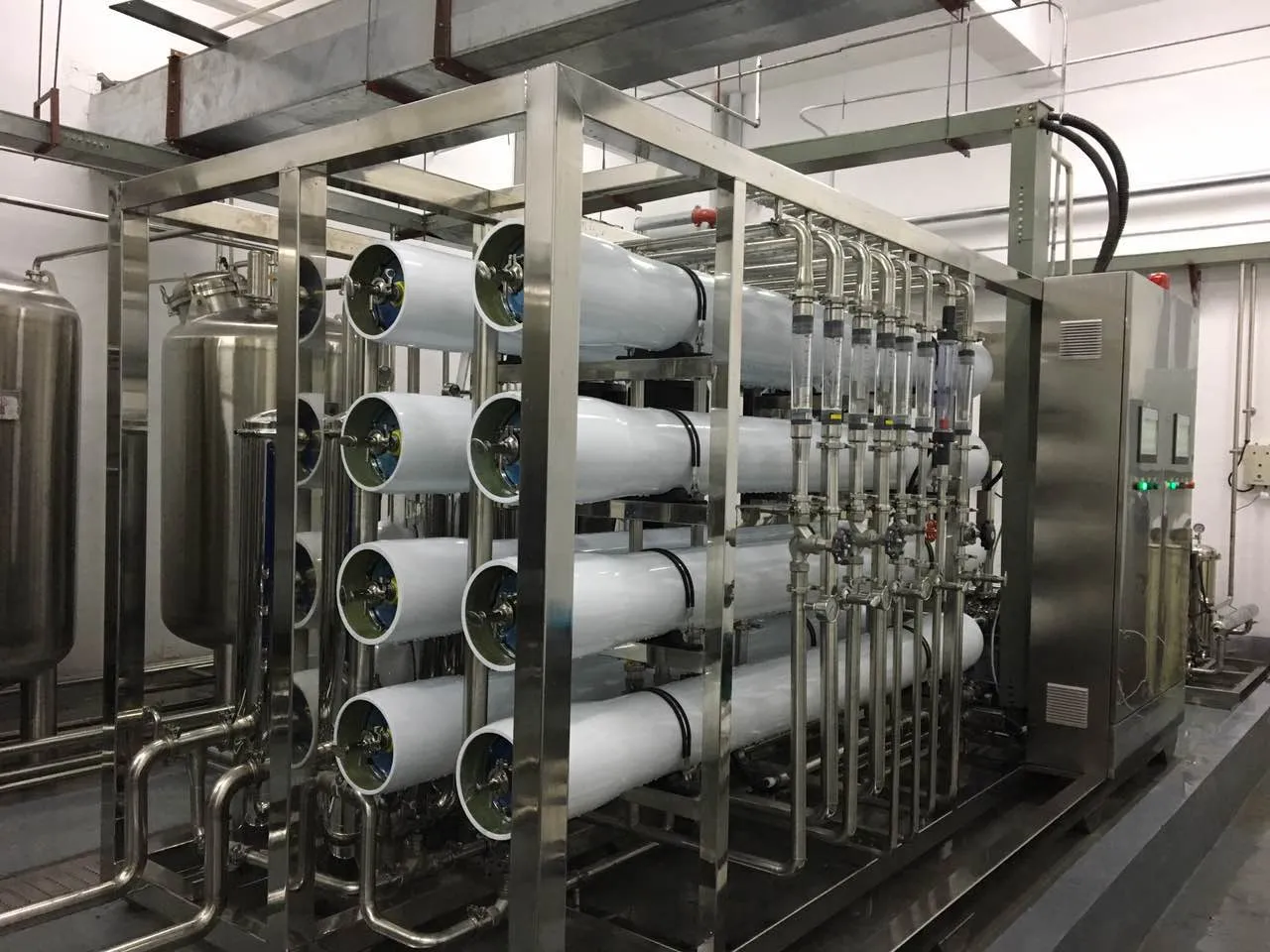
Continuous Optimization and Application Expansion of Mainstream Membrane Technologies
Currently, the mainstream membrane technologies widely used in water treatment include microfiltration, ultrafiltration, nanofiltration, and reverse osmosis.
- Microfiltration/Ultrafiltration: Primarily used as a pretreatment unit, effectively removing suspended particles, colloids, bacteria, and large organic molecules. Research focuses on further improving membrane flux and antifouling capabilities through blending, surface modification, and other methods to reduce pretreatment costs and the frequency of chemical cleaning.
- Nanofiltration: Due to its highly efficient retention capacity for divalent ions and small organic molecules (molecular weight 200-1000 Da), nanofiltration shows great potential in fields such as hard water softening, dye desalination, and antibiotic concentration and recovery. Current research focuses on developing novel nanofiltration membranes with high selectivity and high flux to achieve precise separation of ions with different valence states.
- Reverse osmosis: This is the "gold standard" technology for seawater desalination and ultrapure water production. Research focuses on continuously reducing its high energy consumption costs through the development of novel membrane materials (such as the optimization of polyamide thin-layer composite membranes) and efficient energy recovery devices.
Frontier Research Hotspots: Based on continuous optimization of existing technologies, the following directions represent the most cutting-edge research hotspots and progress in membrane separation technology:
1. Development of Novel Membrane Materials: Traditional polymer membranes (such as polyvinylidene fluoride PVDF and polysulfone PSF) suffer from bottlenecks such as easy fouling and limited tolerance. Exploring novel membrane materials is key to breaking through performance ceilings.
- Two-dimensional membrane materials: Two-dimensional materials, represented by graphene and its derivatives (such as graphene oxide), can be used to construct separation membranes with atomic-level thickness and precise nanopores. Theoretically, this allows for near-frictionless rapid passage of water molecules and precise ion sieving, earning them the title of "next-generation separation membranes."
- Bionic membranes: Inspired by aquaporins in biological cell membranes, researchers are dedicated to developing biomimetic aquaporin membranes. By embedding artificially synthesized aquaporins or similar structures into polymer matrices, it is hoped that extremely high water flux and selectivity can be achieved simultaneously, making it one of the disruptive technologies.
- Covalent organic framework/metal-organic framework membranes: COFs and MOFs are a class of novel porous materials with regular, tunable pore structures. Separation membranes prepared from them possess advantages such as uniform pore size and designable structure, showing great potential in gas separation and precise molecular sieving, and are gradually being applied in the field of water treatment.
2. Innovation in Membrane Antifouling Strategies
Membrane fouling is a core challenge leading to decreased membrane flux and increased operating costs. Antifouling research has shifted from passive cleaning to active defense.
- Surface modification: By grafting hydrophilic polymers (such as polyethylene glycol PEG), zwitterionic polymers, or constructing a hydration layer, a physical barrier is formed on the membrane surface, reducing pollutant adsorption.
- Functionalized coatings: Developing coatings with antibacterial, catalytic, or self-cleaning functions. For example, loading photocatalytic materials (such as TiO₂) onto the membrane surface allows for the degradation of adsorbed organic pollutants under light irradiation, achieving in-situ self-cleaning of the membrane.
- Electrocatalytic membranes: Couple membrane separation with electrochemical processes. By applying an electric field to the membrane surface, strong oxidizing substances such as hydroxyl radicals are generated to degrade pollutants. Simultaneously, the electric field itself repels charged pollutants, achieving integrated "anti-fouling-degradation."
3. Integration and intelligentization of membrane processes: Single membrane technologies often have limitations. Coupled use of different membrane processes or other technologies to create synergistic effects is an important future trend.
- Forward osmosis: Utilizing natural osmotic pressure difference as the driving force, it has low energy consumption and reversible pollution. FO-MD (Forward Osmosis-Membrane Distillation) coupling and FO-RO (Forward Osmosis-Reverse Osmosis) coupling processes demonstrate unique advantages in high-concentration brine treatment, specialized separation, and energy recovery.
- Further Development of Membrane Bioreactors: MBR (Membrane Bioreactor) is a mature wastewater reuse technology. Research focuses on developing anaerobic MBRs for energy recovery (methane production) and exploring deep integration of MBRs with subsequent NF/RO processes to construct a complete "wastewater treatment-reuse-zero discharge" solution.
- Artificial Intelligence and Big Data: Utilizing artificial intelligence and machine learning algorithms to optimize membrane system operating parameters, predict membrane fouling trends, and achieve precise cleaning, thereby enabling intelligent operation and maintenance of membrane systems and minimizing their life-cycle costs.
4. Resource Recovery-Oriented Membrane Processes: Membrane separation is no longer merely viewed as a "removal" technology, but also as a "concentration" and "recovery" technology.
- Nutrient Recovery: Recovering nutrients such as nitrogen and phosphorus from landfill leachate and livestock wastewater using NF or selective RO membranes.
- High-value-added product recovery: Recovering dyes, lithium, rare earth elements, and other precious metals and chemicals from industrial wastewater, turning waste into treasure.
Application of membrane separation technology in water treatment
Adsorption pretreatment
Adsorption pretreatment utilizes adsorbents with high dispersibility or large porosity and a large specific surface area to adsorb dissolved organic matter in water. The adsorbent particles are then retained by a filter membrane, thereby removing organic matter from the water and mitigating membrane fouling. Adsorption is one of the main measures to reduce organic fouling of filter membranes. Currently, commonly used adsorbents for membrane fouling pretreatment include powdered activated carbon (PAC), resins, heated alumina particles (HAOPs), iron oxide nanoparticles, silica particles, and polysulfone colloids. Among these, PAC is a typical representative of adsorbents due to its well-developed pore structure and excellent adsorption performance. PAC has a high removal rate for low-molecular-weight organic pollutants that are difficult to remove by coagulation and ultrafiltration. Chi et al. studied the effect of humic acid molecular weight (MW) on membrane fouling, and the results showed that low-molecular-weight organic matter can be effectively adsorbed and removed without entering the membrane. Membrane pores contribute to membrane fouling. PAC pretreatment has also been shown to effectively remove disinfection byproducts. Furthermore, submicron powdered activated carbon (SSPAC) exhibits high selective adsorption capacity for biomacromolecules; pre-coating it onto the membrane surface can almost completely prevent the increase in transmembrane pressure (TMP) caused by extracellular organic matter from microorganisms. However, due to differences in membrane hydrophobicity and raw water characteristics, numerous experiments have shown that PAC can exacerbate membrane fouling or have no effect on membrane flux. In conclusion, the use of PAC as a membrane pretreatment technology still warrants further investigation. While adsorbents can enhance the removal of organic matter and slow down the fouling rate of ultrafiltration membranes, adsorption pretreatment requires a separate adsorption treatment unit, resulting in large footprints and high infrastructure investment costs. Issues such as...
Reverse Osmosis
Reverse osmosis technology is applied to the advanced treatment of domestic sewage, separating and removing organic matter and salts from the water to ensure that the water quality meets drinking water standards. In practical applications, reverse osmosis membranes have high selectivity and high permeability, and are a membrane treatment method that uses a selective membrane operating at a pressure higher than that of solution osmosis. Although this method itself has a good water purification effect, due to technical factors, the application effect of reverse osmosis technology in my country cannot be compared with that of developed Western countries. Further improvements are still needed in the future to make the application of reverse osmosis equipment more efficient. A sewage treatment plant has been set up in California, USA, and has a machine with a daily sewage treatment capacity of 3... A 7.8m³ reverse osmosis unit enables effective treatment of domestic sewage, allowing it to be reused in the water supply system.
Chemical Wastewater
To prevent the environmental impact of chemical wastewater discharge, it needs to be treated before discharge. Using a combination of nanofiltration and reverse osmosis technologies, industrial wastewater containing ammonium molybdate can be effectively treated, with a molybdenum ion recovery rate exceeding 96%. This not only effectively recovers molybdenum ions but also achieves highly efficient wastewater purification. Furthermore, membrane separation technology is green and pollution-free, making it ideal for industrial wastewater treatment. Combined with specific pretreatment methods, reusable substances can be recovered, achieving wastewater purification and resource recovery goals. Membrane separation is also used in drinking water treatment. Membrane separation technology demonstrates excellent treatment results. Currently, as people's living standards gradually improve, the requirements for drinking water quality are higher. Compared with traditional treatment processes, membrane separation can effectively remove suspended solids and bacteria from water, improving the purification effect of drinking water. The treatment process can utilize ultrafiltration, microfiltration, and nanofiltration to remove particles at the micron level from drinking water. Simultaneously, it can remove some particles that do not reach the micron level, as well as dissolved gases, inorganic substances, and pesticides, improving drinking water quality.
Introduction and Application of Microfiltration Membrane Technology
Compared to other membrane technologies, microfiltration membrane technology is the earliest proposed and most widely used membrane technology. It is mainly used in the pretreatment and primary treatment stages of drinking water production, and can... Effective removal of solid particles, suspended solids, bacteria, and other substances from raw water. When using microfiltration membrane technology to treat drinking water, to achieve good treatment results, it is often necessary to combine microfiltration with other membrane technologies and water treatment methods, such as ultrafiltration membranes, nanofiltration membranes, adsorbents, and coagulants. Based on microfiltration membrane technology, some researchers have attempted to remove humic acid from drinking water using different coagulants and studied the membrane fouling effects of different coagulants, determining the optimal coagulation conditions for drinking water effluent quality and the type and dosage of coagulant for minimizing membrane fouling. Other researchers have used river water as an experimental subject, treating river water samples with activated carbon of different particle sizes. The experiments found that large-particle activated carbon... Larger particle sizes of activated carbon cause more severe fouling than smaller particle sizes.
Chemical Precipitation Pretreatment
Chemical precipitation is a pretreatment method that uses chemical agents to convert dissolved substances in water that may cause membrane fouling into insoluble substances, causing them to precipitate. Amaral et al. used chemical precipitation as a pretreatment process for microfiltration-nanofiltration (MF-NF) to treat stable landfill leachate. This process proved effective in removing organic and inorganic matter from the wastewater, and the results showed that precipitation as a pretreatment for microfiltration ensured low membrane fouling. Cao et al. used Ruth's cake filtration theory to analyze the flux decrease during the filtration process when Ca2+ forms a suspension in alginate solution. The results showed that the addition of Ca2+ reduced... Membrane fouling. Furthermore, researchers used a mixed precipitation-nanofiltration method to recover phosphorus and remove heavy metals from industrial phosphoric acid wastewater, achieving good purification and recovery efficiency. It can be seen that chemical precipitation pretreatment can effectively alleviate membrane fouling, and this method has advantages such as low input cost and simple operation. However, it still has problems such as low treatment efficiency and the possibility of secondary pollution to the environment from the treated solution.
Conclusion
In summary, efficient wastewater treatment can control environmental pollution. Related industries should attach great importance to the application of membrane separation technology in wastewater treatment processes to recover useful substances, desalinate seawater, and improve water quality. Relevant personnel need to comprehensively analyze this technology, combine it with water treatment needs, and rationally select separation technologies for efficient water treatment.