Food Processing Plant Wastewater Treatment Process and Cases
Food processing is a vital industry that nourishes communities worldwide, but it also generates significant volumes of wastewater with unique challenges. From dairy and meat processing to fruit and vegetable canning, food plant wastewater is characterized by high concentrations of organic matter, suspended solids (SS), oils and fats, and fluctuating water quality—all of which require tailored treatment solutions to meet environmental regulations and promote sustainability. As a professional water treatment company, we specialize in designing and implementing efficient, cost-effective wastewater treatment systems for food processing facilities, helping businesses achieve compliance, reduce environmental impact, and even unlock resource recovery opportunities.
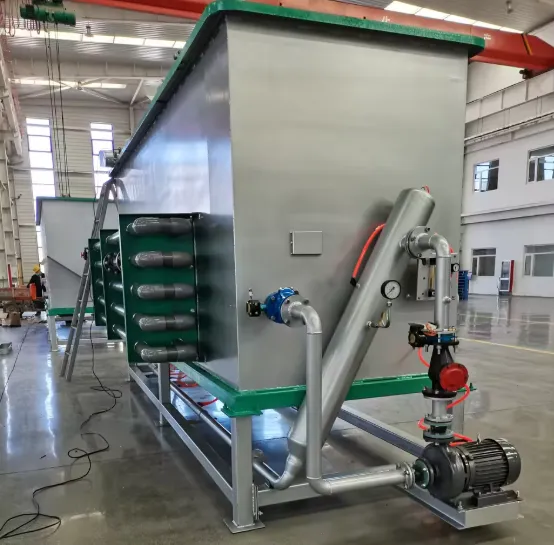
The Core Process of Food Processing Plant Wastewater Treatment
There is no one-size-fits-all solution for food processing wastewater, as its composition varies widely by product type, production process, and seasonal fluctuations. However, most effective treatment systems follow a three-stage process: pretreatment, core biological treatment, and advanced treatment. This "combination strategy" ensures that pollutants are removed step-by-step, resulting in effluent that meets or exceeds discharge standards—and in some cases, can be reused for non-potable purposes.
1. Pretreatment: Remove Large Impurities and Reduce Load
Pretreatment is the foundation of effective wastewater treatment, as it removes large debris and reduces the load on subsequent treatment stages, preventing equipment clogging and improving overall efficiency. Key steps include:
- - Screening: Coarse and fine screens (with gaps of 20mm and 5mm respectively) are used to intercept large solids such as fruit peels, meat scraps, bones, and packaging residues—common contaminants in food processing wastewater.
- - Oil Separation: Oil-water separators or air flotation units are employed to remove free oils and emulsified fats, which can inhibit microbial activity in later biological treatment stages and cause environmental harm if discharged untreated.
- - Equalization Tank: This tank adjusts the water volume and quality, mitigating fluctuations caused by batch production or seasonal changes—ensuring stable operation of the entire treatment system. Wastewater is retained here for 6-8 hours to balance pH, temperature, and pollutant concentration.
- - Coagulation and Sedimentation: Chemicals such as PAC (Polyaluminum Chloride) and PAM (Polyacrylamide) are added to aggregate fine suspended solids and colloidal particles, which then settle out, removing over 95% of SS and 80% of oils.
2. Core Biological Treatment: Degrade Organic Pollutants
Food processing wastewater is rich in biodegradable organic matter (measured by COD and BOD), which is most efficiently treated using biological processes. The combination of anaerobic and aerobic treatment is widely recognized as the most cost-effective and efficient approach for medium to high-concentration food wastewater:
- - Anaerobic Treatment: Using anaerobic microorganisms in an oxygen-free environment, this stage breaks down high concentrations of organic matter into biogas (mainly methane), which can be recovered as an energy source. Common reactors include UASB (Upflow Anaerobic Sludge Blanket) and ABR (Anaerobic Baffled Reactor), with COD removal rates exceeding 80% for high-concentration wastewater (COD > 5000mg/L).
- - Aerobic Treatment: Following anaerobic treatment, aerobic microorganisms further degrade remaining organic matter, nitrify ammonia nitrogen, and remove phosphorus. Technologies such as MBBR (Moving Bed Biofilm Reactor), biological contact oxidation, and CASS (Cyclic Activated Sludge System) are commonly used, achieving BOD removal rates of over 90% and ensuring compliance with ammonia nitrogen standards (< 15mg/L).
3. Advanced Treatment: Ensure Compliance and Reuse
For facilities with strict discharge requirements or goals for water reuse, advanced treatment is essential to remove residual pollutants. Key technologies include:
- - Membrane Separation: Ultrafiltration (UF) and Reverse Osmosis (RO) systems remove fine suspended solids, dissolved organic matter, and salts, producing high-quality treated water that can be reused for equipment cleaning, irrigation, or other non-potable purposes.
- - Advanced Oxidation: Processes such as Fenton oxidation and ozone oxidation target refractory organic pollutants and color, ensuring COD concentrations meet strict standards (< 100mg/L).
- - Disinfection: Ultraviolet (UV) disinfection or chlorine dioxide treatment inactivates pathogenic microorganisms, ensuring the treated water is safe for discharge or reuse.
Successful Cases of Food Processing Wastewater Treatment
Our team has extensive experience in designing and implementing wastewater treatment solutions for various food processing sectors. Below are two typical cases that demonstrate our expertise in addressing industry-specific challenges.
Case 1: Dairy Processing Plant Wastewater Treatment
Project Background: A large dairy plant was generating 500m³/day of wastewater with a COD concentration of 6000mg/L, primarily from equipment cleaning, pipeline flushing, and milk residue. The wastewater contained high levels of milk protein and fat, which were prone to foaming and odor generation, and the plant faced strict discharge standards requiring COD < 100mg/L.
Treatment Process: We designed a system combining pretreatment, anaerobic-aerobic biological treatment, and advanced polishing:
- Pretreatment: Coarse/fine screening → Equalization tank → Air flotation unit (to remove milk fat Floc).
- Biological Treatment: Hydrolytic acidification (6-8 hours) → UASB anaerobic reactor (volume load 3-5kgCOD/m³·d) → A/O aerobic system.
- Advanced Treatment: Activated carbon adsorption → UV disinfection.
Results: The system achieved a COD removal rate of 98%, reducing influent COD from 6000mg/L to < 100mg/L. The biogas generated by the UASB reactor (500m³/day) was reused for on-site heating, saving the plant approximately 300,000 RMB in annual energy costs. The treated water met national first-class discharge standards, eliminating the risk of environmental penalties and enhancing the plant’s green image.
Case 2: Meat Processing Plant Wastewater Treatment
Project Background: A meat processing facility producing 300m³/day of wastewater faced challenges with high SS (500-800mg/L), oils (200-300mg/L), and ammonia nitrogen (150mg/L). The wastewater contained blood, meat scraps, and animal fats, which were difficult to treat and posed a risk of odor pollution and water eutrophication if discharged untreated.
Treatment Process: We tailored a solution to address the high SS and ammonia nitrogen levels:
- Pretreatment: Double screening → Oil separation tank → Coagulation sedimentation (to remove meat scraps and fats).
- Biological Treatment: ABR anaerobic reactor → CASS aerobic system (optimized for nitrification and denitrification).
- Advanced Treatment: Coagulation sedimentation → Chlorine dioxide disinfection.
Results: The system achieved SS removal rate > 95%, oil removal rate > 90%, and ammonia nitrogen removal rate > 90%, with treated water ammonia nitrogen < 15mg/L. A portion of the treated water was reused for on-site flushing, saving the plant 250,000 RMB in annual water costs. The facility also obtained the "Green Factory" certification, improving its market competitiveness.
Partner with Us for Sustainable Food Wastewater Solutions
Food processing wastewater treatment is not just about compliance—it’s about creating sustainable, cost-effective systems that align with your business goals. Our team of experts conducts a comprehensive analysis of your wastewater characteristics, production processes, and regulatory requirements to design tailored solutions that balance efficiency, cost, and environmental responsibility. From pretreatment to advanced treatment, and from system design to installation and operation, we provide end-to-end support to help you achieve your sustainability objectives.