Oilfield Wastewater Treatment Process and Case Study
Oilfield wastewater, also known as produced water, is a byproduct of crude oil extraction and production. It contains complex contaminants such as crude oil, suspended solids, salts, heavy metals, and residual chemicals (e.g., demulsifiers, corrosion inhibitors), which pose serious threats to the environment if discharged directly and can damage oil reservoirs if reinjected without proper treatment. As a professional water treatment company, we are committed to providing efficient, sustainable, and cost-effective oilfield wastewater treatment solutions that balance environmental protection and industrial benefits. Below, we detail the standard treatment process and share a successful practical case to illustrate our technical strength and service capabilities.
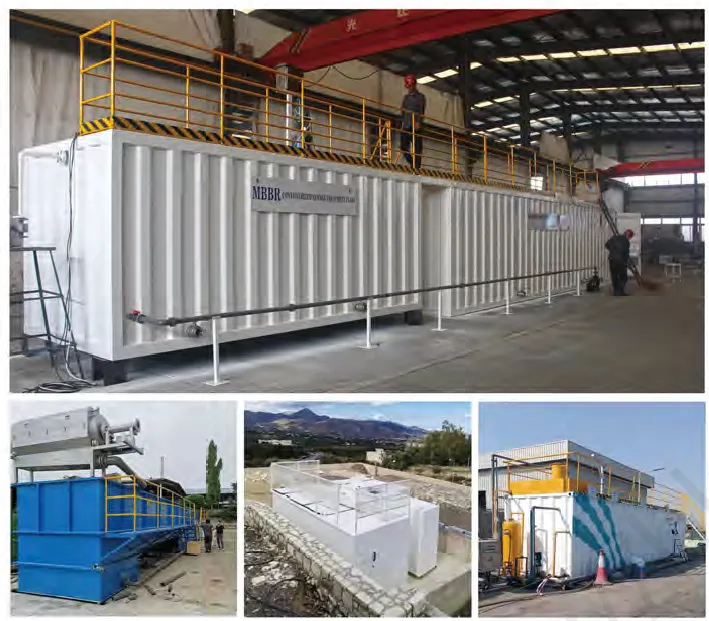
The Standard Oilfield Wastewater Treatment Process
The core goal of oilfield wastewater treatment is to remove harmful contaminants, meet environmental discharge standards or oil reservoir reinjection requirements, and realize the recycling of water resources. The whole process is divided into three key stages: primary oil removal, secondary filtration, and tertiary deep purification, with each stage undertaking specific purification tasks and forming a seamless connection to ensure stable and up-to-standard effluent quality.
1. Primary Oil Removal: Separate Free Oil and Emulsified Oil
The first stage focuses on removing most of the oil content in wastewater, laying the foundation for subsequent treatment. Free oil with a density lower than water is initially separated through gravity separation equipment such as inclined plate oil separators, with an oil removal rate of up to 80%. For emulsified oil that is difficult to separate (oil droplets dispersed in water to form a stable emulsion), demulsifiers are added, and dissolved air flotation (DAF) equipment is used to generate microbubbles. The microbubbles adhere to the emulsified oil droplets, making them float to the water surface for separation, reducing the oil content to below 50mg/L. This stage also removes large-particle suspended solids, avoiding clogging of subsequent equipment.
2. Secondary Filtration: Remove Suspended Solids and Colloids
After primary oil removal, the wastewater still contains fine suspended solids and colloidal particles, which need to be further removed to meet the requirements of deep purification. Multi-media filters filled with quartz sand and anthracite are used to intercept fine particles through physical filtration, reducing the suspended solids concentration to below 10mg/L. Subsequently, precision filters (with a filter element pore size of 5μm) are used for deep filtration to remove tiny impurities that may damage the reverse osmosis membrane in the next stage, ensuring the stable operation of subsequent equipment. The filter equipment is equipped with an automatic backwashing function to regularly clean intercepted impurities and maintain filtration efficiency.
3. Tertiary Deep Purification: Meet Reuse or Discharge Standards
The tertiary stage is tailored according to the final use of the treated water (reinjection or discharge). For wastewater used for reservoir reinjection, reverse osmosis (RO) desalination technology is adopted to remove salts and heavy metals, reduce mineralization, and avoid reservoir clogging and corrosion. For wastewater that needs to be discharged, ion exchange resin or chemical precipitation methods are used to remove heavy metals and residual organic pollutants, ensuring that all indicators meet national and local environmental discharge standards. In some cases, advanced technologies such as ultrasonic treatment or air oxidation may be added to break down macromolecular organic additives, further improving water quality.
Project Background
Bluewav has been operating a large oilfield. The oilfield has a high water-oil ratio, reaching 8:1 (higher than the industry average of 3:1), resulting in a huge amount of produced water that needs to be treated. Previously, the company separated produced water from crude oil and disposed of it through deep aquifer injection, which not only had high disposal costs but also faced increasing environmental pressure. With the expected growth of crude oil production, the amount of produced water would continue to increase, so the company urgently needed an efficient, low-cost treatment solution to realize the recycling of produced water, with the treated water used for oilfield reinjection and surrounding greening irrigation.
Our Solution
Based on the characteristics of the oilfield’s produced water (brackish, high oil content, and complex composition) and the customer’s needs, our team designed a proprietary multi-stage treatment process and completed the design, construction, and commissioning in less than 18 months. The core process includes:
- - Screen filtration and advanced microfiber filtration to remove large particles and colloids;
- - Micron cartridge filtration to further purify water quality and protect the reverse osmosis membrane;
- - Reverse osmosis (RO) desalination to reduce the salinity of brackish water;
- - Sludge treatment (including dissolved air flotation) and chemical balance adjustment with calcium hydroxide to ensure stable treatment effect.
We also developed a proprietary multi-stage automatic filter technology before RO desalination, which effectively optimizes water reuse efficiency and reduces treatment costs while ensuring treatment stability. The treatment plant is designed to handle 3,500 m³/h of produced water, equivalent to 437,500 barrels per day, fully meeting the customer’s production demand.
Project Results
The project achieved remarkable results after commissioning: 92% of the treated produced water is used for oilfield reinjection and greening irrigation, realizing the recycling of water resources and reducing the company’s dependence on natural groundwater. Compared with the previous deep aquifer injection disposal method, the project reduced disposal costs by 35% and solved environmental challenges, achieving a win-win situation between environmental protection and economic benefits. This project provided an innovative, low-cost, and sustainable solution for the company’s produced water management, laying a solid foundation for the sustainable development of the oilfield.
Conclusion
Oilfield wastewater treatment is a complex and systematic project that requires professional technical support, customized solutions, and strict quality control. Our company has rich experience in oilfield wastewater treatment, integrating advanced technologies and practical experience to provide customers with one-stop solutions from process design, equipment manufacturing, to on-site commissioning and after-sales service. We are committed to helping oilfield enterprises solve environmental problems, reduce operation costs, and realize the sustainable utilization of water resources, contributing to the green and efficient development of the oil and gas industry.