Hospital Sewage Treatment Process and Cases
Hospitals are vital spaces for safeguarding public health, but they also generate a large volume of sewage that carries unique and complex pollutants. Unlike ordinary domestic sewage, hospital sewage contains pathogens such as bacteria, viruses, and parasite eggs, as well as pharmaceutical residues, heavy metals, organic matter, and suspended solids, which pose significant threats to the ecological environment and human health if not properly treated. As a professional water treatment company dedicated to providing customized environmental solutions, we have rich experience in hospital sewage treatment projects. This blog will detail the standard process of hospital sewage treatment and share typical cases to demonstrate how we help medical institutions achieve environmentally friendly and compliant discharge.
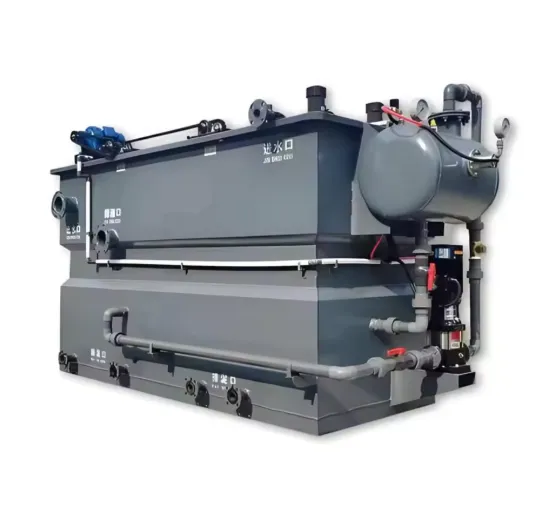
The Core Process of Hospital Sewage Treatment
Hospital sewage treatment follows the principle of "classified diversion, local treatment, and eliminating pollution at the source", and the overall process is divided into four key stages: pretreatment, biological treatment, advanced treatment, and disinfection. Each stage is closely linked to ensure that the treated water meets the national discharge standards and eliminates potential health risks.
1. Pretreatment Stage: Lay the Foundation for Subsequent Treatment
The pretreatment stage is mainly responsible for removing large-particle impurities and adjusting water quality and quantity to reduce the load of subsequent treatment processes. It includes two key links: grid filtration and regulation tank treatment.
First, the sewage passes through coarse grids (aperture 5-10mm) and fine grids (aperture 1-3mm) in turn, which can effectively intercept suspended solids such as hair, rags, and medical waste fragments, preventing blockage of subsequent pipelines and equipment. The grid residue needs to be cleaned regularly to avoid odor caused by anaerobic fermentation. Then, the filtered sewage enters the regulation tank, where the mixing device prevents suspended solids from settling, and the lift pump uniformly transports the sewage to the next process. The regulation tank can balance the water quality (pH value, pollutant concentration) and water volume (hospital drainage has strong periodicity), with a residence time of 6-12 hours, which can be adjusted according to the hospital scale.
2. Biological Treatment Stage: Remove Organic Pollutants Efficiently
The biological treatment stage is the core of hospital sewage treatment, mainly through the metabolism of microorganisms to remove organic matter (BOD, COD) and part of nitrogen and phosphorus in the sewage. Common processes include contact oxidation method, activated sludge method, and hydrolysis acidification pool (optional).
The contact oxidation method is a mainstream process, which sets fillers in the aeration tank, and microorganisms attach to form a biofilm. Oxygen is provided through aeration to degrade organic matter. The sewage enters the contact oxidation tank from the bottom and fully contacts the biofilm. The aeration system (blower + micro-pore aerator) maintains the dissolved oxygen (DO) at 2-4mg/L to promote the metabolism of aerobic microorganisms, with a residence time of 6-8 hours and a COD removal rate of 60%-80%. The activated sludge method is suitable for large hospitals with large water volume. It uses suspended activated sludge flocs to adsorb and degrade pollutants, requiring a sludge return system. The sludge concentration (MLSS) is controlled at 2000-4000mg/L, and the sludge age (SRT) is 5-15 days. The hydrolysis acidification pool can decompose macromolecular organic matter into small molecules to improve biodegradability, which is suitable for refractory wastewater and is carried out in an anaerobic or anoxic environment with a residence time of 2-4 hours.
3. Advanced Treatment Stage: Further Improve Water Quality
The advanced treatment stage is mainly used to further remove suspended solids, nitrogen, phosphorus, residual organic matter, and pharmaceutical residues, ensuring that the effluent quality meets higher standards. It mainly includes sedimentation tank and filtration process (optional).
The sedimentation tank is usually vertical or inclined-tube type, which separates the sludge and clear water after biological treatment. The sludge settles at the bottom of the tank and is returned to the biological tank or discharged into the sludge tank through the sludge pump, while the supernatant enters the disinfection tank. The surface load of the sedimentation tank is 0.5-1.0m³/(㎡·h), and the residence time is 1-2 hours. For hospitals with high effluent quality requirements (such as infectious disease hospitals), filtration processes such as quartz sand filter, activated carbon filter, or ultrafiltration (UF) can be added to remove residual SS, chroma, odor, and some heavy metals. Activated carbon can effectively adsorb pharmaceutical residues in the sewage.
4. Disinfection Stage: Eliminate Pathogenic Risks
The disinfection stage is the last line of defense for hospital sewage treatment, whose core function is to kill pathogens such as bacteria, viruses, and parasite eggs in the sewage to ensure the safety of the effluent. Common disinfection processes include sodium hypochlorite disinfection, chlorine dioxide disinfection, ultraviolet disinfection, and ozone disinfection, each with its own advantages and applicable scenarios.
Sodium hypochlorite disinfection is suitable for small and medium-sized hospitals due to its low cost and simple operation, but it will produce disinfection by-products and needs on-site preparation. Chlorine dioxide disinfection has high sterilization efficiency and few by-products, which is suitable for infectious disease hospitals and general hospitals, but the equipment investment is relatively high. Ultraviolet disinfection has no residue and does not require chemical agents, but it is sensitive to turbidity and requires pretreatment. Ozone disinfection has strong oxidizing property, good decolorization and deodorization effect, but high energy consumption and complex equipment maintenance, which is suitable for high-end hospitals or advanced treatment. In terms of design, the contact time of chlorine disinfection is not less than 1.5 hours, that of chlorine dioxide disinfection is not less than 1 hour, and that of ultraviolet disinfection is adjusted according to the intensity. The total residual chlorine at the outlet of the contact tank is controlled at 2-8mg/L, which needs online monitoring.
5. Sludge Treatment: Prevent Secondary Pollution
The sludge generated in the biological treatment and sedimentation stages contains a large number of pathogens and belongs to hazardous waste, which must be properly treated to prevent secondary pollution. The sludge is collected by the sludge tank and transported to the plate and frame filter press for dehydration through a diaphragm pump. After dehydration, the water content of the sludge is ≤80%, and it is entrusted to a qualified hazardous waste treatment unit for disposal. The filtrate is returned to the regulation tank for re-treatment.
Typical Hospital Sewage Treatment Cases
With professional technology and rich project experience, we have successfully completed sewage treatment projects for many hospitals, covering general hospitals, infectious disease hospitals, and emergency hospitals, providing reliable environmental protection guarantees for medical institutions.
Case 1: Sewage Treatment Project for a 900-bed University Hospital in Denmark
Our client is a 900-bed Danish university hospital located near Copenhagen. The hospital sewage contains hazardous pharmaceuticals and antibiotic-resistant bacteria, which poses a serious threat to the aquatic environment and public health. The local environmental authorities require that the sewage must be strictly treated before being discharged into the sewer and aquatic environment. The client needs an advanced and stable water treatment system to remove hazardous substances and pathogens, and realize the reuse of treated water if possible.
According to the client's needs, we customized a treatment process combining membrane bioreactor (MBR) and advanced polishing technology. The MBR process is used for biological treatment and filtration of sewage to remove organic matter and nutrients. On this basis, ozone oxidation, activated carbon (GAC), and ultraviolet treatment are added to remove residual pharmaceuticals and pathogens. We have optimized the process parameters, such as controlling the activated carbon consumption at 7-8mg/L while ensuring a high removal rate of micro-pollutants. After treatment, the sewage no longer has toxic effects on aquatic organisms, can be directly discharged into the local stream for recreational use, and can also be reused for irrigation and hospital cooling water. Since 2014, the system has been operating stably, and we have maintained close cooperation with the hospital to continuously optimize the process and ensure compliance with strict discharge standards.
Case 2: Sewage Treatment Project for Emergency Infectious Disease Hospitals (Wuhan Huoshenshan & Leishenshan Hospitals)
During the COVID-19 pandemic, we undertook the sewage treatment project for Wuhan Huoshenshan and Leishenshan Emergency Hospitals, which are specialized in treating COVID-19 patients. Huoshenshan Hospital has 1000 beds and Leishenshan Hospital has 1600 beds. The hospital sewage mainly comes from negative pressure wards, ICUs, medical technology departments, and staff rest areas, containing a large number of infectious pathogens, pharmaceuticals, and disinfectants, with complex components. The project requires emergency construction and stable operation to ensure that no sewage is discharged into the environment without treatment.
Combined with the emergency characteristics of the project and the requirements of infectious disease hospital sewage treatment, we adopted the process of "pre-disinfection contact tank + septic tank + lift pump station (including crushing grid) + regulation tank + MBBR biochemical tank + coagulation sedimentation tank + contact disinfection tank". The sewage is pumped into the municipal pipe network after disinfection and then discharged into the urban sewage treatment plant. We laid anti-seepage membranes under the sewage treatment station according to the standard of garbage landfills, and collected and disinfected rainwater to ensure zero pollution discharge. The MBBR biochemical tank is designed with two parallel systems, with a residence time of about 5.6 hours, and the dissolved oxygen (DO) is controlled at ≥2mg/L to efficiently remove organic pollutants. The disinfection system is divided into pre-disinfection and secondary disinfection, with sufficient contact time and flexible adjustment of chlorine dosage to ensure the complete killing of pathogens. During the 56-day operation period, the system operated stably without major safety accidents, and the effluent quality fully met the discharge standards of infectious disease hospitals in GB18466-2005, making important contributions to epidemic prevention and control.
Our Commitment
Hospital sewage treatment is related to public health and ecological environment protection, which requires professional technology, strict standards, and thoughtful service. As a professional water treatment company, we always adhere to the concept of "environmental protection first, customer-oriented", and provide customized sewage treatment solutions for hospitals of different scales and types. We have a professional technical team that can provide one-stop services from project design, equipment installation, commissioning to operation and maintenance, ensuring that the sewage treatment system operates stably, efficiently, and compliantly, helping medical institutions achieve green development and protect public health.