Sequencing Batch Reactor (SBR): Process & Suitable Applications
In the realm of wastewater treatment, efficiency, flexibility, and cost-effectiveness are the cornerstones of sustainable solutions. The Sequencing Batch Reactor (SBR) technology has emerged as a versatile and reliable choice for both municipal and industrial wastewater treatment, leveraging a time-sequenced approach to deliver high-quality treated water. Unlike conventional continuous-flow systems that require multiple separate tanks for different treatment stages, SBR integrates all key processes into a single reactor, making it ideal for diverse applications—from small-scale rural communities to large industrial facilities.
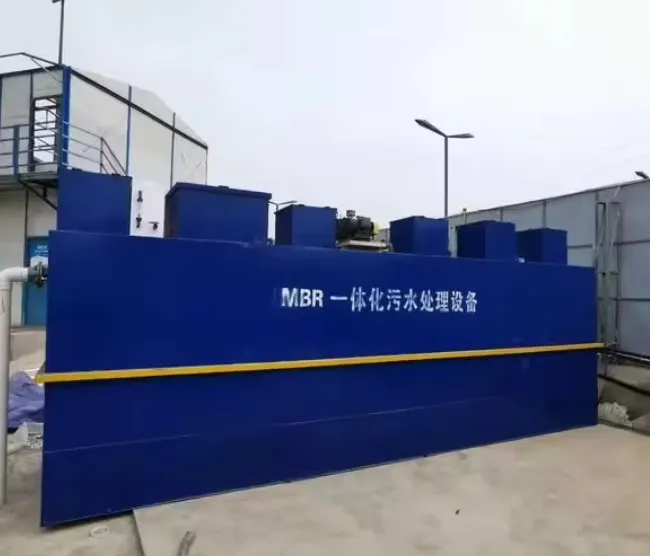
First developed in 1914 by British scholars Ardern and Locket, SBR has evolved significantly over the past century, with advancements in automation and aeration technology solidifying its position as a leading biological treatment method worldwide. At its core, SBR operates on a “fill-and-draw” batch principle, where wastewater is treated in a single tank through a series of sequential, timed phases. This unique design eliminates the need for separate equalization, aeration, and clarification tanks, reducing capital costs and footprint while maintaining exceptional treatment performance.
The SBR Process: A Step-by-Step Breakdown
The SBR process unfolds in five distinct, cyclic phases, each optimized to target specific pollutants and ensure effective treatment. These phases are repeated continuously, with the duration of each phase adjustable based on wastewater characteristics and discharge requirements:
1. Fill Phase
Raw wastewater, after preliminary treatment (such as screening to remove floating debris), is pumped into the SBR reactor. During this phase, mixing may be applied (without aeration) to blend the incoming wastewater with the existing activated sludge, creating a uniform mixture. This phase typically lasts 1–2 hours, though it can be adjusted to accommodate variable flow rates—a key advantage for facilities with intermittent wastewater discharge. The fill phase sets the stage for biological degradation by providing microbes in the activated sludge with a fresh supply of organic pollutants.
2. React Phase
The react phase is the heart of the SBR process, where biological treatment occurs. Aeration is introduced to the reactor, creating an aerobic environment that encourages the growth of beneficial microorganisms. These microbes break down organic compounds (measured as BOD and COD), convert ammonia nitrogen to nitrite and nitrate (nitrification), and remove phosphorus through biological uptake. In some cases, anaerobic or anoxic conditions can be introduced during this phase to enhance denitrification, further improving nutrient removal. The react phase typically lasts 4–8 hours, depending on the concentration of pollutants and desired treatment outcomes, with COD removal rates often exceeding 94%.
3. Settle Phase
Aeration and mixing are stopped during the settle phase, allowing the activated sludge (containing microbes and treated solids) to settle to the bottom of the reactor. This phase is critical for solid-liquid separation, ensuring that the treated water (supernatant) is clear and free of suspended solids. Unlike conventional systems, SBR achieves complete quiescence during settling, resulting in higher separation efficiency than continuous-flow settlers. The settle phase usually lasts 1–2 hours, with the duration adjusted to prevent sludge resuspension.
4. Decant Phase
Once the sludge has settled, the clear, treated wastewater (effluent) is decanted from the top of the reactor using a specialized device called a decanter. The decanter is designed to avoid disturbing the settled sludge, ensuring that only treated water is discharged. This phase typically lasts 0.5–1 hour, and the effluent meets stringent discharge standards—often complying with GB18918 Level 1A standards or equivalent international regulations, making it suitable for reuse or safe release into surface waters.
5. Idle Phase
The idle phase is a flexible period that allows the reactor to prepare for the next cycle. During this phase, any excess sludge (waste activated sludge) is removed to maintain the optimal sludge age and microbial population. The idle phase typically lasts 0.5–1 hour, though it can be shortened or eliminated in systems with multiple reactors operating in sequence. This flexibility ensures that the SBR system can adapt to fluctuations in wastewater flow and composition.
Key Advantages of SBR Technology
SBR’s unique design and operational flexibility offer numerous benefits over conventional wastewater treatment systems, making it a preferred choice for many applications:
- Compact Footprint: By integrating all treatment stages into a single tank, SBR requires up to 30% less space than conventional systems, making it ideal for sites with limited land availability—such as urban areas or existing treatment plants being retrofitted.
- Cost-Effective: Reduced infrastructure needs (no separate tanks for equalization, aeration, or clarification) lower capital costs. Additionally, energy consumption is optimized through adjustable aeration and mixing, and maintenance is simplified due to fewer components.
- Flexible Performance: The duration of each phase can be adjusted to handle variable wastewater flow rates and pollutant concentrations, making SBR suitable for both continuous and intermittent discharge sources. It also excels in treating difficult-to-biodegrade wastewater, addressing the limitations of other anaerobic systems like UASB.
- High Treatment Quality: SBR delivers excellent removal of BOD, COD, suspended solids (TSS), nitrogen, and phosphorus, consistently meeting or exceeding strict discharge standards. Advanced automation ensures precise control of treatment conditions, further enhancing effluent quality.
- Easy Expansion & Retrofit: SBR systems can be easily expanded by adding more reactors, and they are well-suited for retrofitting existing wastewater treatment plants—minimizing disruption and extending the facility’s lifespan.
Suitable Applications of SBR Technology
SBR’s versatility makes it applicable to a wide range of municipal and industrial wastewater treatment scenarios, particularly those with variable flow rates or strict effluent requirements. Below are its most common and well-suited applications:
1. Municipal Wastewater Treatment
SBR is an excellent choice for small to medium-sized cities and towns, as well as rural communities. Its compact design and flexibility make it ideal for handling the daily fluctuations in domestic wastewater flow. For example, the Bowling Green Municipal Utilities in Kentucky, USA, implemented a large-scale SBR system to treat wastewater for over 60,000 residents, achieving significant improvements in effluent quality (reducing BOD from 13 mg/L to 5 mg/L and ammonia-N from 6.9 mg/L to 1.9 mg/L) while addressing space constraints. SBR also supports biological nutrient removal, making it suitable for municipalities required to meet strict nitrogen and phosphorus discharge limits.
2. Industrial Wastewater Treatment
SBR is highly effective for treating industrial wastewater from various sectors, especially those with intermittent discharge or high concentrations of organic pollutants. Key industrial applications include:
- Food & Beverage Industry: Treats wastewater from breweries, dairy farms, food processing plants, and味精 (monosodium glutamate) production facilities—addressing high BOD, COD, and nutrient levels. For instance, SBR systems are used to treat wastewater from milking centers and potato processing plants, achieving efficient nutrient removal.
- Light Industry: Suitable for wastewater from textile, paper, and pharmaceutical plants, where pollutant concentrations vary significantly. SBR’s ability to handle shock loads and difficult-to-biodegrade compounds makes it a reliable solution.
- Small-Scale Industrial Facilities: Ideal for factories, workshops, and industrial parks with limited wastewater volume but strict discharge standards. SBR’s modular design allows for easy customization to meet specific industrial needs.
3. Specialized Wastewater Treatment
SBR is also well-suited for specialized applications, including:
- Hospital Wastewater: Effective for treating wastewater from small to medium-sized hospitals (up to 800 beds), removing pathogens, organic matter, and pharmaceuticals while meeting strict health and environmental standards.
- Landfill Leachate Treatment: Used to treat leachate from landfills, which contains high concentrations of organic pollutants and heavy metals. SBR’s flexibility allows it to adapt to the varying composition of leachate over time.
- Retrofit Projects: Perfect for upgrading existing wastewater treatment plants that need to improve effluent quality or expand capacity without significant land acquisition. SBR can be integrated into existing lagoons or tanks, reducing retrofit costs and downtime.
Conclusion
The Sequencing Batch Reactor (SBR) technology stands out as a flexible, cost-effective, and high-performance solution for wastewater treatment. Its unique batch-operated, single-tank design simplifies operations, reduces footprint, and delivers consistent, high-quality effluent—making it suitable for a wide range of municipal and industrial applications. From small rural communities to large industrial facilities, SBR adapts to varying flow rates and pollutant loads, ensuring compliance with stringent environmental regulations while supporting sustainability goals.
We specialize in designing, installing, and maintaining custom SBR systems tailored to your specific needs. Our team of experts leverages decades of experience to optimize SBR performance, helping you achieve efficient, reliable, and cost-effective wastewater treatment. Whether you’re upgrading an existing facility or building a new one, SBR technology offers a proven path to cleaner water and a greener future.